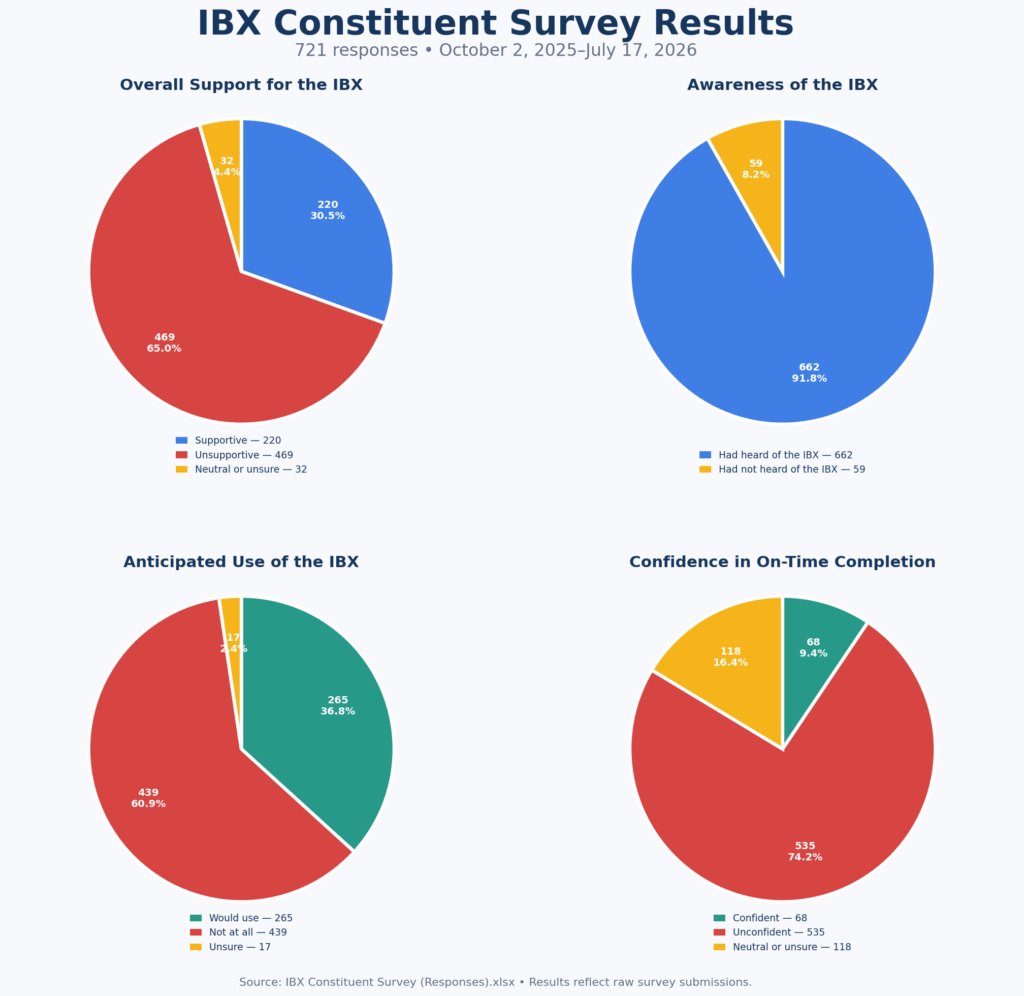
As we wait for the MTA to complete the Draft Environmental Impact Statement for the IBX, which is expected to be released this fall, State Senator Joseph Addabbo has been running an ongoing poll in his district about it.
You may have participated in it. We asked for the results thus far, and they aren’t surprising. As of July 17, 721 people participated in the survey, all of whom were screened to make sure they reside in Addabbo’s district.
92% were aware of the IBX before taking the survey
65% were unsupportive of building the IBX
61% said they would not use it
75% had no confidence in the project being completed on time
68% said they did not support upzoning around Eliot Avenue.
63% said they did not support upzoning around Metropolitan Avenue.
(The Grand Avenue stop is not in Addabbo’s district.)
The results of the poll indicate that the idea of the IBX is not popular. This may not matter since politicians these days listen to the real estate industry, not their constituents, and they want this built. As seen in the NYC rental heat map, the hottest real estate is in Manhattan and along the Brooklyn and Queens waterfronts. This is where we find high-density, high-rise housing. Building there is extraordinarily expensive and complicated, so they are looking to expand further into Queens. A rail line is predicted to bring more renters to the area, and the City of New York is more than willing to go above and beyond what City of Yes allows and is now talking about special “IBX zoning” around the stations in our area and all along the line.
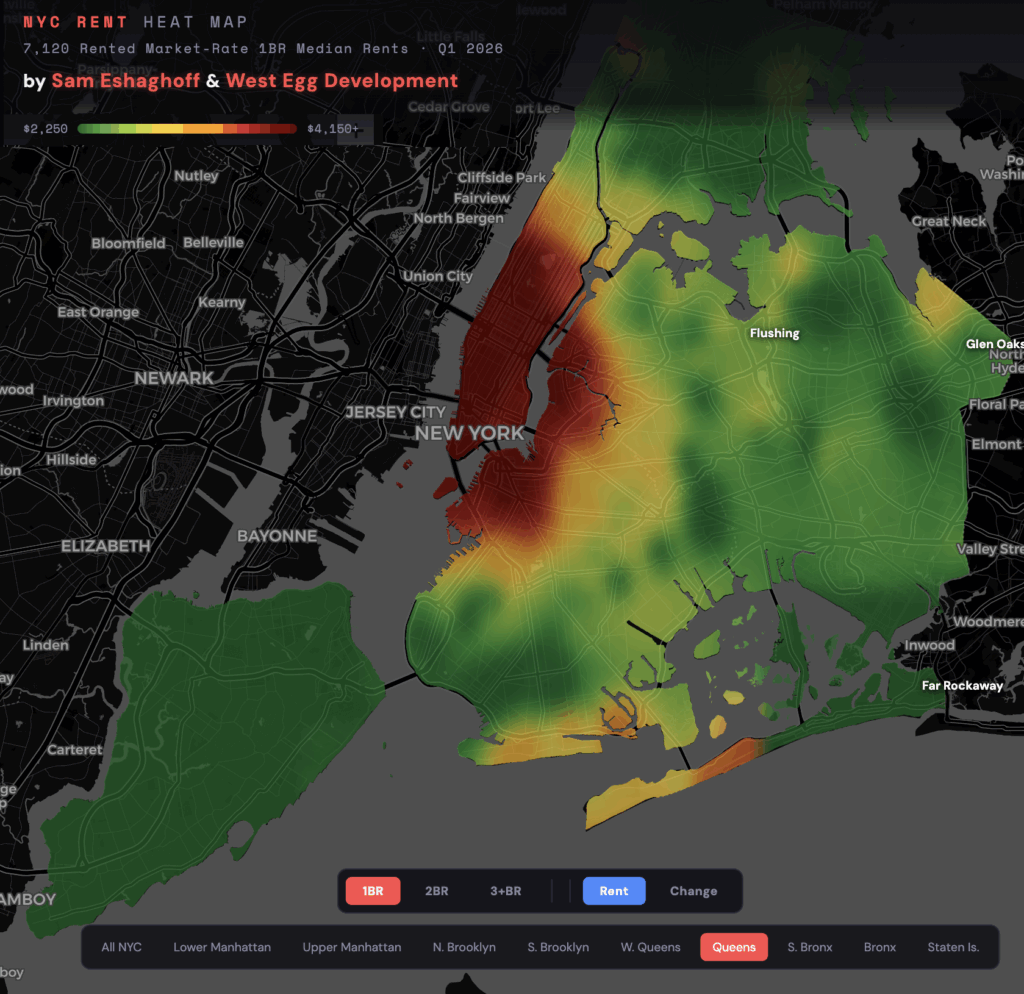
If you look closely at the map, the interesting thing is that there is a dark green “necklace” of affordability which closely tracks with the path of the IBX. However, we’ll be saying goodbye to comparatively affordable rent and home prices and hello to gentrification that prices people out should this be built. This is the exact opposite of what this area needs and wants, but it’s no longer about affordability and quality of life, just packing more people in with no upgrades in public facilities or services.
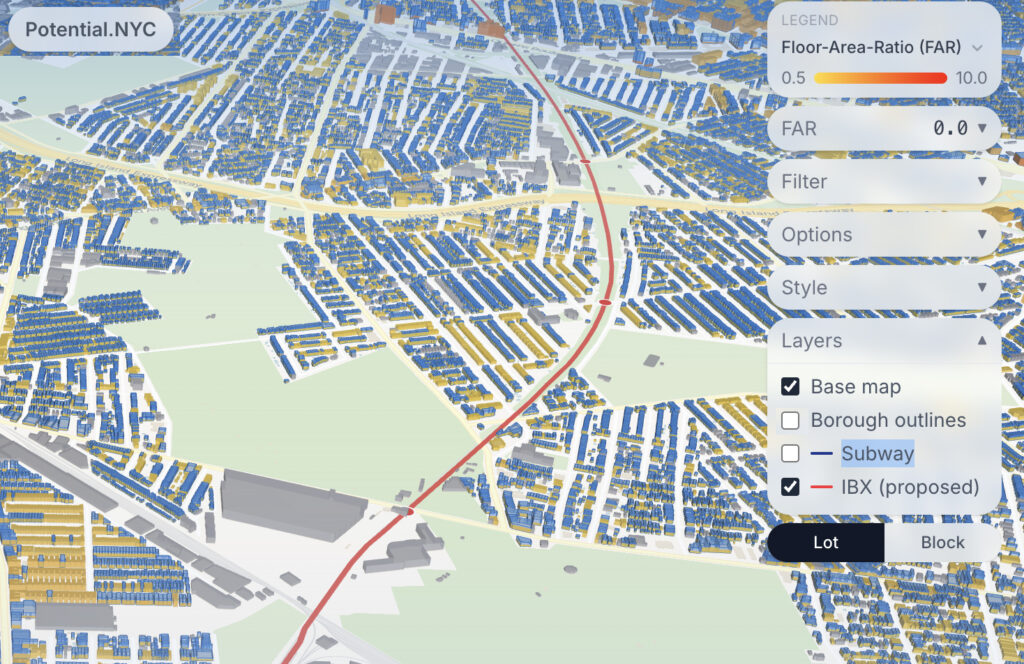
There is another map at Potential.NYC meant for developers which “maps the policy impact of NYC’s zoning rules: what’s allowable to build, where capacity is underutilized, and what upzoning could unlock across the city.” They have a special tab that shows the path of the IBX to help speculators target this area.
Add into the mix the recent conversations by transportation lobbyists about a “land value tax” being imposed on properties near the IBX to pay for its funding and what’s going on couldn’t be clearer.
So, what can be done about it?
Right now, we have three options, and we must choose all of them.
1. There is an election for governor in November which will be consequential for the continuation of this project. Vote wisely. This costs nothing and the outcome at the polls could dramatically change the outcome of the IBX.
2. Our electeds should be asking tough questions about this project and negotiating concessions from the MTA and the governor, but Addabbo is the only elected official who is currently listening to his constituents and not the real estate lobby, whose purse strings keep the rest advocating for their interests instead of ours. Put pressure on the other State Assembly Members and Senators to act. Also make it clear to all that any land value tax needs to be dead on arrival. This is a necessary time investment.
3. Hire environmental experts to analyze the EIS and file a court challenge. This has halted many a bad project. Is this neighborhood willing to once again open its wallets to fund a court action? If it doesn’t fall apart from lack of construction funding, legal action might be what ultimately stops it, so it would be worth it.
As we have seen in the past, it’s the people who passionately defend their communities that stand against bad plans and get them stopped. JPCA plans to do all we can to protect local interests, but we need your help and support, so please take steps to act whenever we issue a call to do so.