August 27th, 1776; 2 A.M.:
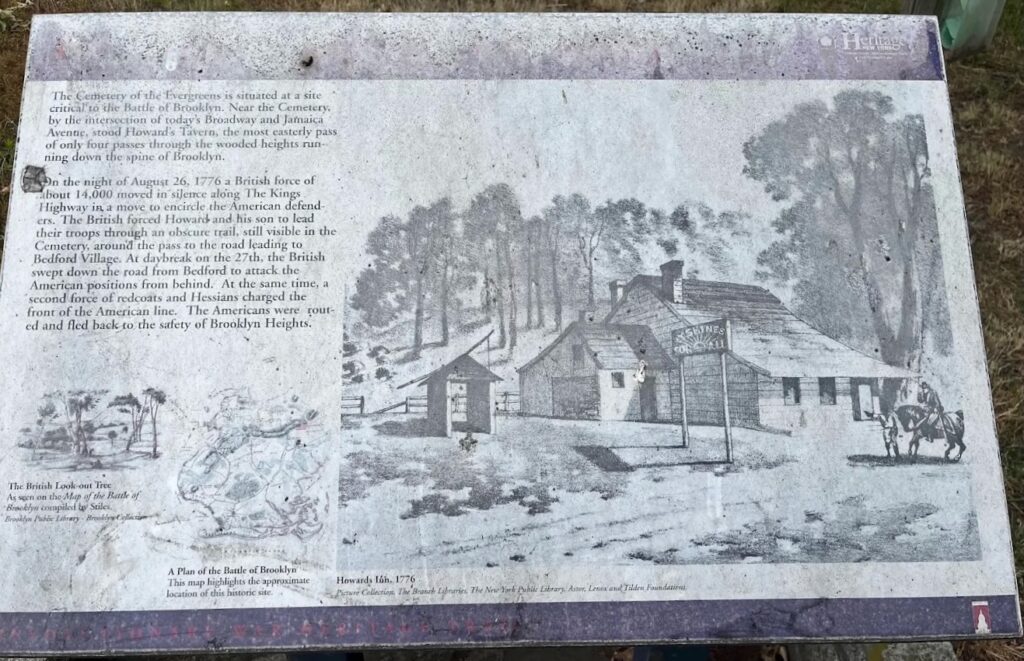
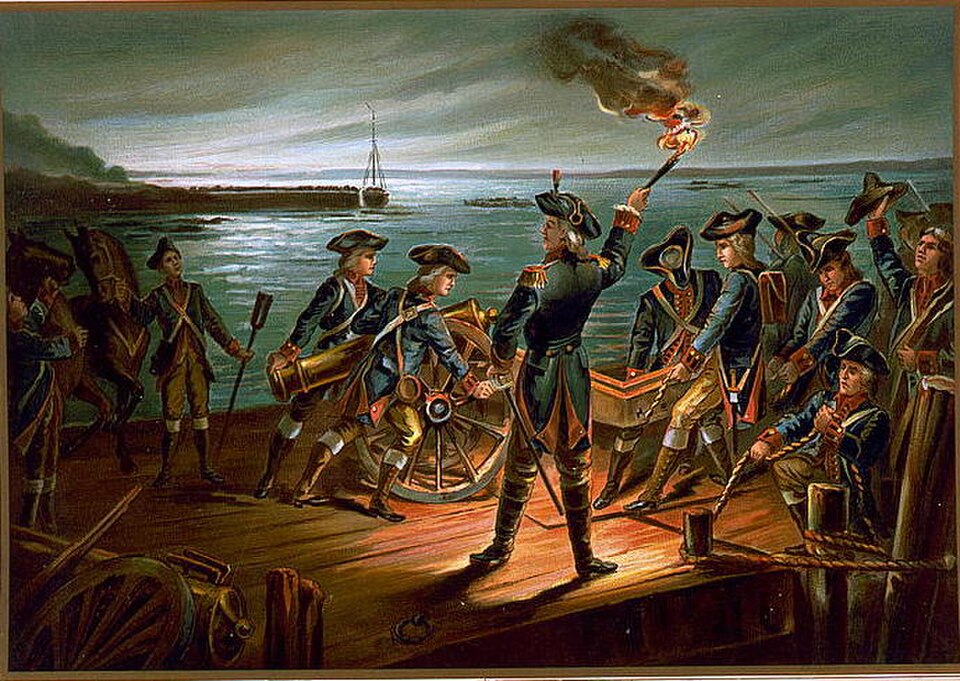
I was awakened from sleep and roused out of bed by a British soldier who ordered me to dress quickly but quietly. As he led me down the stairs of my father’s tavern, a chill ran down my spine. My father, William Howard, stood in a corner with three British soldiers surrounding him with bayonets fixed. Two British officers stood in the barroom. It was unseasonably cool, and the officer who appeared to be in charge was shrouded in a military cloak, which was somewhat odd, it being late August. He asked for a glass of liquor from the bar, which was given to him, and he drank it in one gulp.
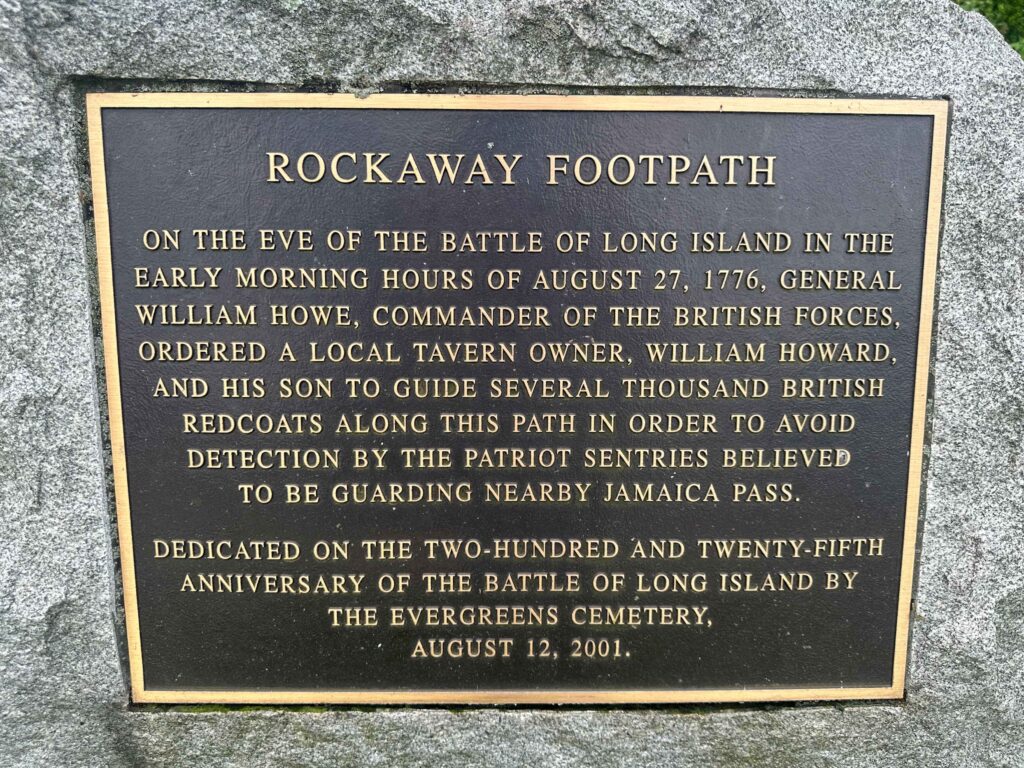
The general in charge was a distinguished looking man by the name of William Howe, who was accompanied by his second-in-command, General Henry Clinton. The commander-in-chief addressed my father in a rather friendly manner, stating that, “I must have one of you to show me the way over the Rockaway Path, around the (Jamaica) Pass”.
My father replied, “We belong to the other side General, and can’t serve you against our duty.” To this General Howe replied, “That is all right, stick to your country or stick to your principles, but Howard, you are my prisoner and must guide my men across these hills and out of the way of the enemy.” My father made some further objection but was silenced by the general who said: “You have no alternative. If you refuse, I shall have you shot through the head.” My father, thus compelled to serve the cause of the enemy, was marched out under a guard, who had orders to shoot him if he attempted to desert, and I was taken along with him.
I’d noticed that the farmers with their carts had nearly all gone on their way to the ferry before the intruders made their appearance, who must have waited until the tavern lights went out before entering. They must have used the key my father kept hung on a nail by the door for the occasional late-night traveler. Once outside I saw the army lying in a field in front of our house, and, “A strong guard had been stationed by the British around our house, and every person compelled to remain in it.” (Field, Historic and Antiquarian Scenes in Brooklyn… 1868).
This surreal scene took place just 3 miles from my home in Glendale, NY, and is part of a first-hand account of William Howard’s teenage son who told this remarkable tale until his death at age ninety-four and is included in T.W. Field’s book Historic and Antiquarian Scenes in Brooklyn…, written in 1868. What’s even more incredible is that this local tavern owner was part of the biggest battle of the American Revolution, given the number of troops deployed and engaged, and the number of American casualties. Tragically, over 1,000 Americans had been captured during this one-day battle and delivered to certain death on the deplorable prison “hell ships”, most notably the HMS Jersey, in Wallabout Bay, Brooklyn.
Although we may never know if William Howard, Sr. was threatened with his life, notable authors and historians have concluded that the Howards were, “roused out of bed, closely questioned, and pressed into service” (McCullough, 1776, p. 169) leading a two mile line of 10,000 British troops, with horse-drawn cannons, through the Rockaway Indian Footpath, to the Jamaica Pass where the British forces would successfully flank the Continental Army, and eventually corner them against the East River in Brooklyn Heights.
Part 2 – Background of Breuckelen aka Brookland & Its Inhabitants
Before we get back to the events of that night, let’s explore some interesting facts and discrepancies. Starting in the 1600s, Brooklyn was made up of six Dutch-settled villages: Brooklyn, Bushwick, Flatbush, Flatlands, Gravesend, and New Utrecht. The Rising Sun Tavern stood at the intersection of the Bedford (now Broadway) and Jamaica (now Ave) Turnpikes, in the area called Ostwout (East Woods) in the town of Flatbush. Built around 1715 by Howard Jr’s grandfather, the tavern was also known as Howard’s Inn or Half-Way House, because it was half-way between the ferry that crossed the East River to Manhattan, and Jamaica which was the most important market town in Queens.
Although Howard was English, most of his farming neighbors were Dutch, and you will certainly recognize the names of these famous Dutch families since our streets and cemeteries are constant reminders of their significance to our area: Remsen, Lefferts, Vanderbilt, Wyckoff & Onderdonk. Some historians believe that many Dutch families would have been indifferent to American Independence, especially since there was talk of granting enslaved people their freedom during that time. About sixty percent of households owned at least one slave, and with many farms relying on slave labor, this was their most valuable commodity. In fact, when John Lefferts died in 1776, his seven slaves were estimated to be worth £296 sterling. But Howard’s tavern was extremely unique in that it had two bars, one for his Dutch customers and the other for their slaves! This was an extreme contrast to slave life in the southern colonies. As T.W. Field wrote on the topic, “The negroes were permitted the privilege of getting soundly tipsy at the east end of the house, while at another bar, directly opposite, was dispensed the elements of intoxication to the whites.” Field was actually quite an amusing historical author for the times, and he goes into greater detail about this, and other topics.
When the British and Hessians started landing on the shores of Gravesend Bay on August 22nd, they were 20,000 troops strong, which included 4,000 Hessians or hired German soldiers. So, the folks of Flatbush immediately abandoned their houses, lands, and belongings, having heard, “Such fearful stories of the barbarity of the Hessian invaders that they expected nothing less than massacre at their hands”. (Field, Battle of Long Island, 1869). Their tables were left spread with food, untasted, and the enemy soldiers believed it was done to entice and poison them! Orders were issued that cattle and other livestock be driven from the farms so the enemy could not benefit from such bounty, and grain and hay was to be stacked far from the homes so it could be set on fire once the landing began. In stark contrast to that scene, when the British and Hessian troops began their march upon the shores of Brooklyn, it is said that Loyalists came out to cheer them! It makes me wonder why the Loyalists were not also afraid of the Hessians if their reputation was to kill first and ask questions later? When the British and Hessians began poking about the Dutch homesteads, they were astonished and impressed by the wealth of these inhabitants and shockingly wondered why they would give it all up and separate from the Crown, which was surely responsible for all this abundance of wealth!
Part 3 – The Skirmishes Before the Battle
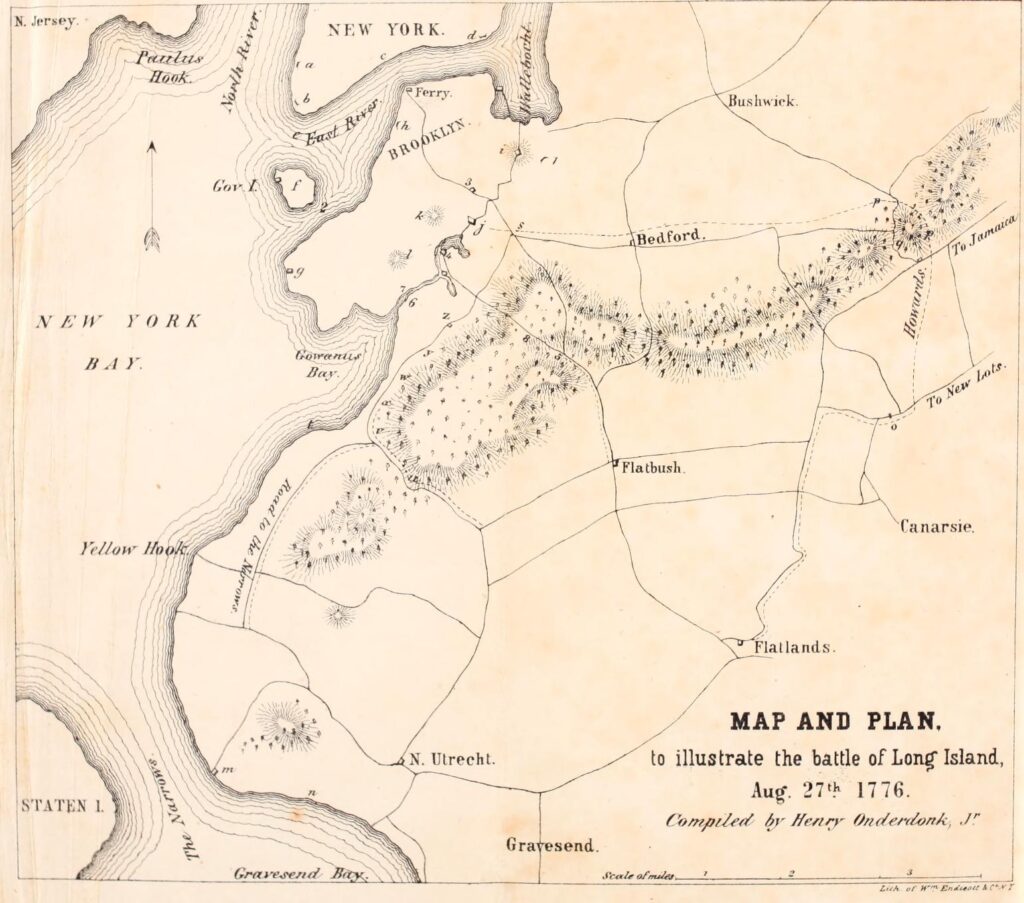
One thing historians do agree on is that the rebel army was completely outnumbered and outmatched. They were untrained, undisciplined, deficient in clothing, and equipped with antiquated artillery and ammunition. They were using decades-old muskets, most notably the Brown Bess, and their rifles, although accurate, took too long to load. It may have been Washington who on one occasion described them as “milling about camp as if on holiday!” Unfortunately, Washington made a huge mistake of only guarding three of the four passes through the Woody Heights of Guan, Guana, or Gowanus, (depending on the map you find). It was a Colonial or Lenape name for a series of hills extending in a ridge along western Long Island (Brooklyn and Queens), with the highest point on Battle Hill in Greenwood Cemetery. Washington put his rebel forces on The Gowanus Pass in the west, and the Flatbush and Bedford Passes in the center, but disregarded the Jamaica Pass farther east.
Aug 22: The western boundary of the village of Flatbush, “here occurred the first collision between the British and the American forces on our Island”. That evening 300 American riflemen guarding the village abandoned their line as soon as the Hessians, with their battery of six guns, began to fire. But taking this “slumberous little Dutch Village” would not prove easy.
At dawn the whole Pennsylvania battalion of 553 men surprised the sleeping Hessians, but again they ran back to the woods when the artillery was brought upon them. That afternoon the Americans planned another attack, and this time they pushed the Hessians back south of the Dutch Church of Flatbush, where they were held for over an hour. Here is T.W Field’s comical account of the Hessians reaction to the Americans’ style of war: “The poor Germans, however, began to find this kind of warfare harassing and depressing. They had been accustomed to fight enemies who slept at night and behaved altogether in a decent and respectable style of belligerency. These reckless, dare-devil barbarians, who routed up their camp at night with the deadly din of war, or who slyly crawled serpentlike into an ambush during the day, from which their long rifles wounded and slew their comrades, were an intolerable nuisance!”
Some Hessians took cover in the Dutch homes, and when the Americans positioned their artillery and fired upon them, the homes of Jeremiah Vanderbilt, Leffert Lefferts, and E. Hegeman, went up in flames. “Although it has been a popular habit to charge this incendiarism upon the Hessian invaders, it is certain that these dwellings were fired by the Americans, to prevent their occupation as defensive positions by the enemy.” Between the homes and the hay fields, it was as if all of Flatbush was on fire!
Skirmishes like this continued throughout the 25th, but it was near midnight of the 26th that two enemy scouts were spotted foraging for watermelons near the Red Lion Inn at the Gowanus Pass and were immediately fired upon. At the same time farther east, 10,000 British troops, along with Generals Clinton, Cornwallis, Lord Percy and Commander Howe were heading in the direction of Howard’s Inn, along the Jamaica Pass. Their 3 loyalist guides were unfamiliar with the way over the Rockaway Path, and they divulged that the proprietor of the Rising Sun Tavern knew the way. The massive group moved slowly, and as silently as possible, to not alert their enemy, with at least 16 horse-drawn artillery pieces.
Part 4 – Leading the Enemy on the Rockaway Path
William Howard, Jr. explained how six horses had to be hitched to each cannon in order for them to gallop up the hills of Howard’s Point, part of the land owned by his family, which is now in The Evergreens Cemetery. He further explained how the soldiers sawed, rather than chopped down young trees to get through the pass, for fear of making too much noise. “Everything was conducted in the most silent manner possible, and with such caution against surprise, it showed that the enemy expected to be attacked by the Americans,” (along the pass). Former assistant superintendent of the cemetery Anthony Salamone pointed out that if the British were hauling artillery, they would have steered clear of Howard’s Point and crossed where the terrain was more level. It was confirmed there were five rebel horsemen guarding the pass, who were captured and questioned. Lt. Edward Dunscomb, a 22-year-old King’s College graduate who resisted cooperating was called an “impudent rebel” and was threatened with hanging! (McCullough, 1776).
According to Howard, Jr., they were let go at the Jamaica Road, and when they arrived back at the tavern the guards were astonished that the army had made it through, and that the pass, for the most part, was unguarded. Howard, Jr.’s story ends with how friendly the soldiers back at the house were and how, “Many of the soldiers were exceedingly agile young men who were fond of athletic sports”. He then describes how the one guard was pole-vaulting himself onto their roof! The part of Howard’s story that is the most doubtful is that General Howe was most likely too far back in the procession to have been the one to speak to his father. It is also said that Howe was sympathetic to the colonists’ complaints, and that it wasn’t his “style” to threaten a fellow Englishman with beheading!
John Rousmaniere, author of Green Oasis in Brooklyn, The Evergreens Cemetery, perhaps said it best: “William Howard, Jr. lived out a long life in or near the Halfway House, and he repeatedly told the story of the Battle of Brooklyn – a story so intriguing and important that he can be forgiven the embellishments he applied from time to time.”
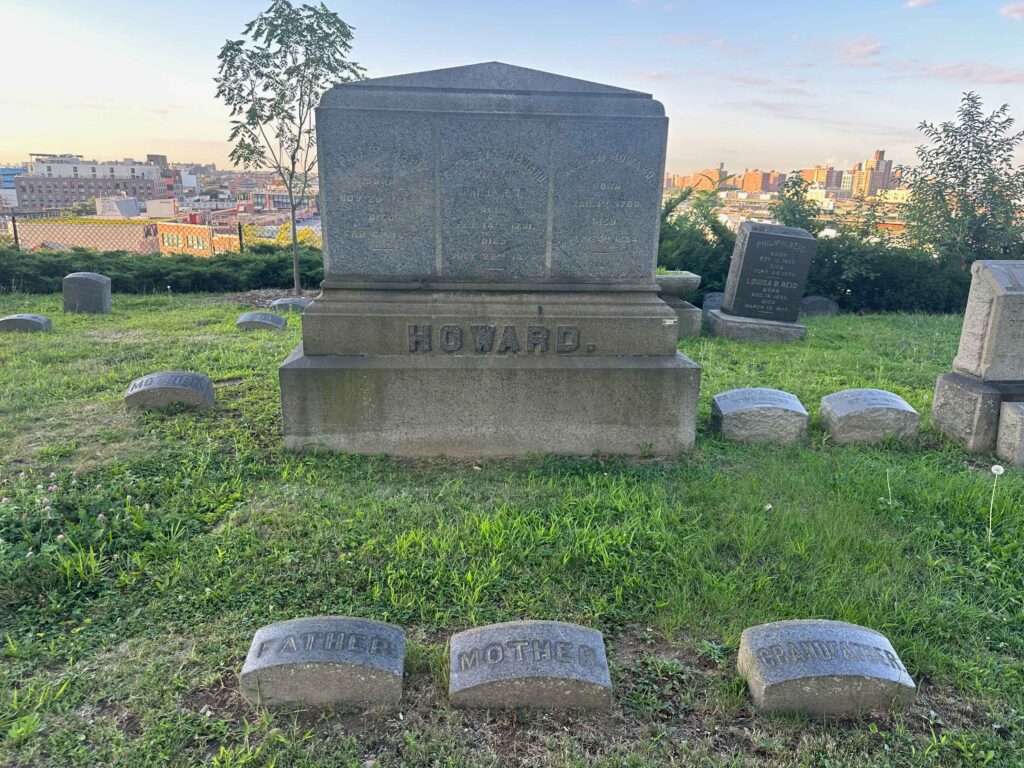
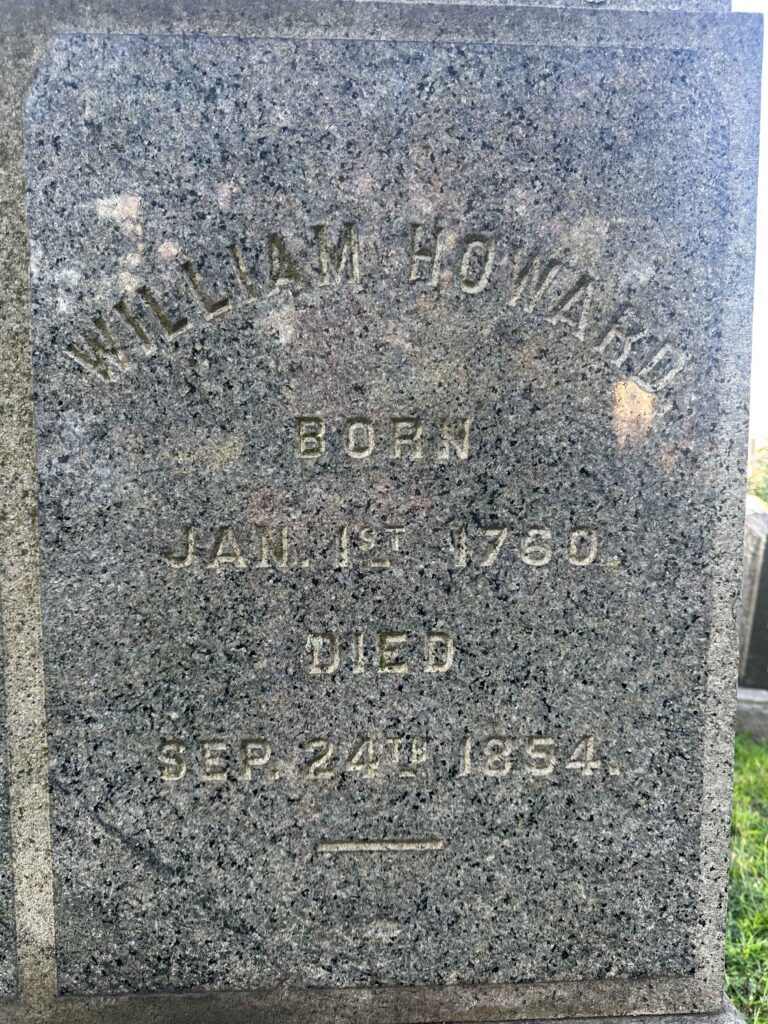
But perhaps the most frustrating part of researching this story is that William Howard, Jr.’s birth year is clearly marked as 1760 on the family grave, yet he himself, and all but one other source states that he was 14, so it just may be that the headstone is incorrect, which is actually a quite common occurrence.
Furthermore, his death year is marked 1854, but most sources say he died and was buried in 1853! So here are just some of the perplexities and mysteries when researching an event that happened some 250 years ago!
The Cemetery of the Evergreens was established in 1849, and William Howard, Jr. sold his property on Howard Hill or Point to the founders, who buried him there when he died in 1853 (or 4). Howard’s Point was renamed Beacon Hill when the Seaman’s Monument was built at about the same time.
Lastly, I may never have known about the story connected to Howard’s tavern had it not been for a chance meeting in the Cemetery of the Evergreens with former field worker and historian Danny Daddario.