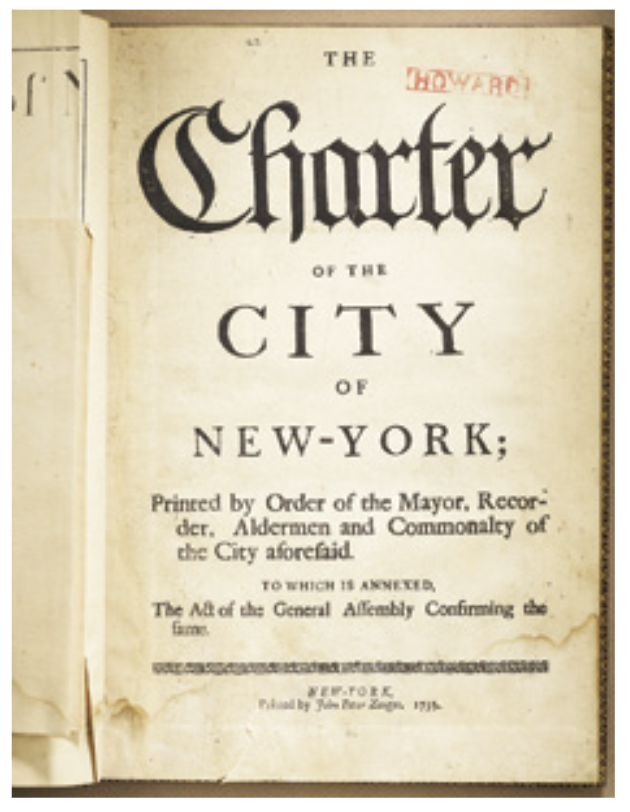
If you are like most New Yorkers, you probably do not spend your evenings reading the City Charter. I don’t blame you. Most people have enough to worry about without studying hundreds of pages of government language.
Unfortunately, that is exactly why you need to pay attention this November.
There will be five Charter questions on the ballot dealing with things like outdoor dining, street projects, city contracts, building permits and the city’s financial reserves. Some of it will sound harmless. Some of it will probably sound pretty good. Government loves words like “streamline,” “efficiency,” and “safety.” The important question is what those words mean once you give City Hall the power to act.
We’ve been down this road before.
Under Mayor Eric Adams, two Charter Revision Commissions put questions before voters. The 2025 commission dealt heavily with housing and land use, creating new expedited processes for certain housing projects and an Affordable Housing Appeals Board that can review certain City Council land-use decisions. Those proposals passed.
Why should somebody in Middle Village, Maspeth, Glendale, or Ridgewood care about something called an “expedited land-use review procedure”? Because we just lived through City of Yes.
City of Yes rewrote zoning rules across New York City, including rules involving housing density and parking. I opposed parts of that approach before I was elected because I do not believe every neighborhood should be treated the same. What works in Midtown Manhattan does not necessarily work on a residential block in Queens. Our streets, schools, sewers, parking, and infrastructure are not theoretical things on a planner’s map. We live with them every day.
The lesson is not that every Charter proposal is automatically bad. The lesson is that a few lines on the back of your ballot can change a lot more than people realize.
And here is something else voters should know.
When Mayor Mamdani’s Charter Commission announced this year’s proposals, City Hall proudly rolled out endorsements from groups including Transportation Alternatives, Open Plans, Open New York, and the Democratic Socialists of America, among many others.
Every one of those organizations has a right to advocate for what it wants. That’s democracy. But let’s not pretend the average New Yorker walks into this process with the same advantages. These groups have lawyers, lobbyists, professional advocates, policy experts and people who follow city government for a living.
Most residents are at work. They are paying bills, taking care of their families, trying to get home through traffic and wondering why everything in this city costs more every year.
What I find insulting about the way government handles these ballot questions is the assumption that people won’t dig any deeper than the nice-sounding description printed in front of them. Put “affordable housing” in the title. Put “street safety” in the title. Call something “government efficiency.” Then hope nobody asks what power is changing hands.
New Yorkers are smarter than that.
This year’s proposals include changes intended to speed up outdoor-dining approvals, street and bike-lane projects, contracts and building permits. Those may sound like technical matters until the outdoor-dining structure is outside your house, the parking disappears on your block, or a major street redesign is moving ahead and your community feels it had little say in the matter.
I cannot tell you how to vote on these questions, and I am not going to.
What I am asking you to do is read them. Look past the title. Ask who gets more power, who gets less, what review is being removed and who spent months pushing for the proposal.
Don’t let City Hall, a lobbyist or an advocacy group do your thinking for you.
It is your neighborhood. It is your city.
And ultimately, it is your Charter.