The Importance of Strong Zoning & Land Use Regulations
Since 1990, when the Board of Estimate was abolished, the NYC Council held the final say on land use changes in NYC. However, the recently adopted 2025 NYC ballot proposals remove this authority for certain land use decisions regarding housing. Instead of keeping the decision-making authority local, an accelerated review process was created that bypasses the NYC Council and shifts the final say to the Mayor’s Office and the Department of City Planning.
Advocates argued that the prior system encouraged Council Members to work against the city’s “greater good”, preventing density increases in their neighborhoods, resulting in higher housing prices citywide. However, the reality is that each Council Member is accountable to their community and aware of what makes their neighborhood unique. The new top-down approach is undemocratic, perhaps even more so than the Board of Estimate—which was deemed unconstitutional by the US Supreme Court for its undemocratic nature—and places the power in the hands of citywide politicians and unelected bureaucrats. This creates a lack of accountability opening the door to the influence of special interests, developers, and short-sighted policy fads.
Nearly every New Yorker agrees that housing affordability is important, with our city becoming increasingly less affordable. However, runaway development is not the solution. To the contrary, overdevelopment destroys the character of neighborhoods, lowers quality of life, and accelerates the fleeing of families out of the city.
Contrary to what advocates may argue, building denser housing is not the only way to increase affordability. One of the biggest drivers of housing costs is demand. When families are competing with developers, investors, and wealthy buyers looking to turn homes into high rises, rentals, and large mansions, there is no way for families to compete. As family homes are purchased and developed, the number of remaining one- and two-family houses dwindles, causing the price of the houses that remain to grow even more. This causes families, especially young families, to be pushed out of the housing market.
The adoption and enforcement of protective land use regulations can prevent this from occurring. These regulations would prevent multifamily conversions, ban short term rentals such as AirBnB, and create limits on the floor area ratio and total square footage that can be built on each plot. This would allow starter homes to stay starter homes and preserve middle class neighborhoods. Importantly, developers would be taken out of the single- and two-family housing markets, increasing affordability and empowering families to purchase these homes.
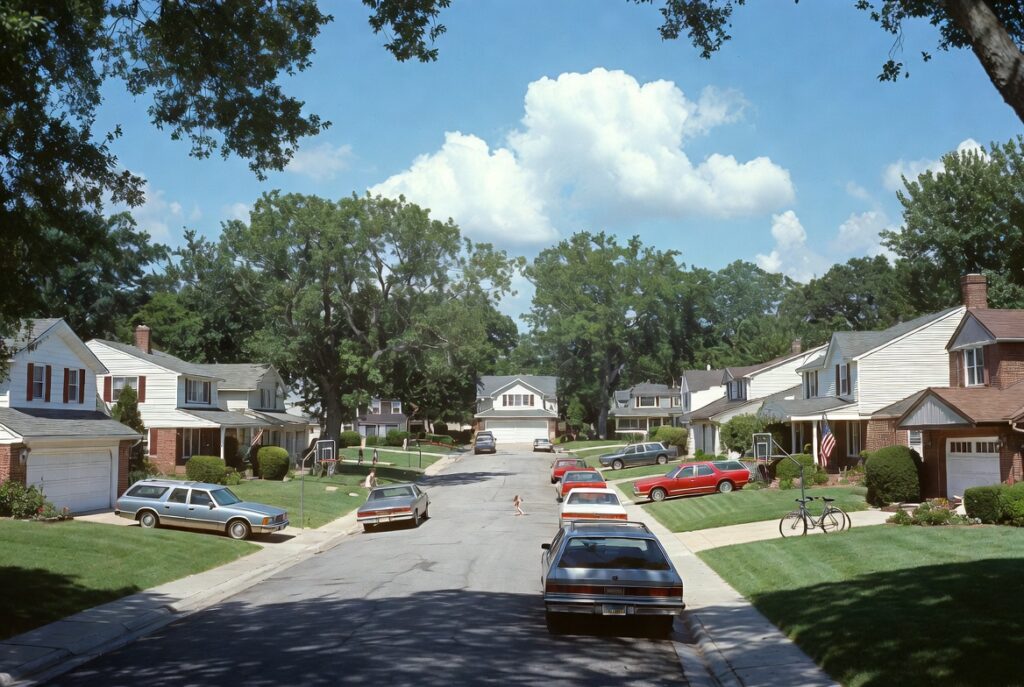
This fight is happening right now in the Nassau County neighborhood of Levittown. Levittown was founded as the exemplar of an affordable community of starter homes for working class Americans. Yet, as time passed, housing costs in Levittown kept increasing. The prices were no longer reflective of small starter homes, but now based on the potential value of the mansion that could be built on the housing plot. With even their most successful children unable to afford to raise a family in the neighborhood where they grew up, residents have had enough. In response, the community is pushing the Town of Hempstead to pass common sense regulations that prevent harmful overdevelopment and preserve the neighborhood’s character as middle class homes at middle class prices.
This same strategy can be applied within the City of New York. One of the greatest strengths of New York City is that we have a city for everybody.
From the dense streets of Manhattan, to the rowhouses of Ridgewood, and the almost suburban living of Eastern Queens, our city has diversity that makes every neighborhood feel special. This quality gives each neighborhood its own character. Instead of having to leave the city – the lifestyle you are looking for can be found in another of the city’s neighborhoods.
This special quality created a large and prosperous middle class, who were able to plant their roots and keep our city strong when many other cities in the United States failed. The City must abandon “one-size-fits-all” housing policy blunders and pursue targeted increases in density along with protective land use regulations that increase affordability and preserve neighborhoods. This would encourage economic development where it makes sense, but keep our city’s many residential neighborhoods calm, safe, and affordable where young families can plant their roots.
Advocacy for these policies starts in the community. Most residents feel the pain of the affordability issues affecting our city but are not aware of all the solutions. This opens the door for the well-funded developer lobby to be the loudest voice addressing these problems, pushing for policies that are best for the developers but not current residents. Fortunately, our neighborhood has a history of making its voice heard and keeping the community informed on these important issues. It is up to all of us to continue this advocacy. As history has shown, the passion residents have for their communities—for their kids to have the same or better quality of life as they did—is more powerful than any outside influence, no matter how well funded. Join your local civic, such as our very own Juniper Park Civic Association, bring your friends, and get involved.
JPCA has been at the forefront of fighting these issues, both through advocacy and in court, and will continue the fight. By informing, organizing, and mobilizing our neighbors, together we can continue the push for common sense zoning and land use regulations that preserve a safe, calm, and affordable New York for future generations.