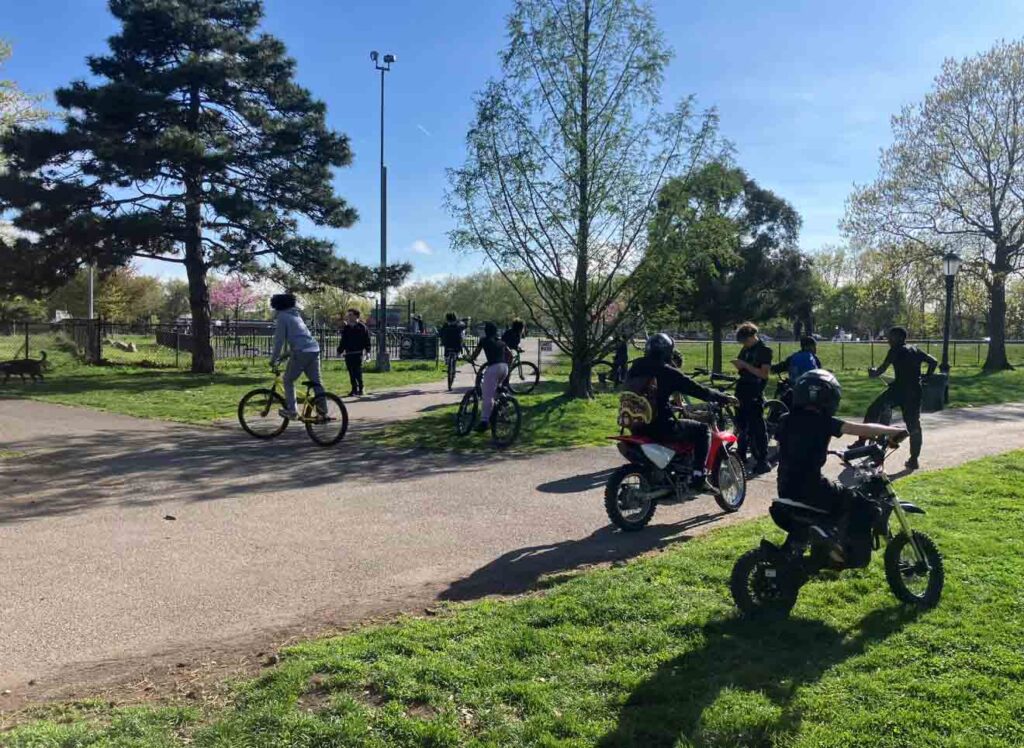
A resident in our community recently watched two minors riding illegal dirt bikes on a public street. He did the right thing. He called 911 and waited for the police. But when officers finally showed up, they arrived at the wrong location, dismissed the crime, and then made the situation even worse. Instead of enforcing the law, they spoke to the parents of the two minors, blamed the neighbors for calling 911 on their kids, and told the kids to enjoy themselves while the illegal behavior continued.
Think about what that teaches. It teaches the minors that what they are doing is not really illegal. It teaches them that even if a neighbor calls 911, even if the police come, nothing will happen. It teaches the parents that they can continue endangering their own children and everyone around them, and the system will shrug. That is not policing. That is surrender.
And then came the part that should outrage every resident of Middle Village and Maspeth. It was said that the commanding officer of the precinct wanted to give those officers a commendation. If that is true, then the problem is not just one bad call. It is a culture. A culture that rewards inaction, excuses non enforcement, and treats basic public safety as optional. This is not an isolated problem.
The 104 has a history, in the minds of many residents, of refusing to take reports seriously, whether it involves homeless men harassing neighbors, spitting incidents, or even potential hate crimes. Too often, residents come away with the same conclusion: if taking a report might raise crime numbers or require real follow-up, the easier path is to minimize the complaint, brush it aside, or pretend it does not rise to the level of enforcement.
Unfortunately, that has become a tradition in the 104, and everyone in this community knows it. This is exactly the culture too many of us have been warning about for years. In the 104 Precinct, residents increasingly get the sense that unless something turns into a major headline, the default response is to look the other way. Illegal dirt bikes on local streets. Reckless riding near Juniper Valley Park. Dangerous conduct around Atlas Mall. Minors weaving through traffic on e-bikes, dirt bikes, and other illegal vehicles. Too often the message from the system is not “stop” but rather, “proceed”. That matters because kids learn fast. They learn from parents, from peers, and from authority figures. When officers show up and effectively tell minors to enjoy themselves, they are not calming a situation. They are endorsing it. They are teaching those kids that the law is flexible, consequences are optional, and neighbors who complain are the real problem. That is how disorder spreads.
This is also part of a bigger citywide problem. For years, New Yorkers have been told that enforcement is somehow unfair, outdated, or politically inconvenient. Bail reform weakened consequences. Anti-enforcement politics weakened morale. And a broader culture of excuses has weakened the basic expectation that laws will actually be enforced. Then politicians point to crime statistics and tell the public everything is improving while residents watch disorder unfold in real time. The answer is not complicated. The 104 Precinct needs to enforce the law. Dirt bikes are not street legal on public roads. That is not ambiguous. When minors are riding them, officers should intervene, issue summonses where appropriate, seize vehicles where allowed, and make clear to both the children and the parents that dangerous conduct will not be tolerated. Residents who call 911 should be thanked for trying to protect their neighborhood, not treated like the problem. Middle Village and Maspeth are not asking for special treatment. Residents are asking for the basics. They want police officers who take quality of life offenses seriously before those offenses escalate. They want a precinct that backs up law abiding neighbors, not reckless behavior. And they want children taught that laws matter, because the worst lesson any community can teach a young person is that there are no consequences.