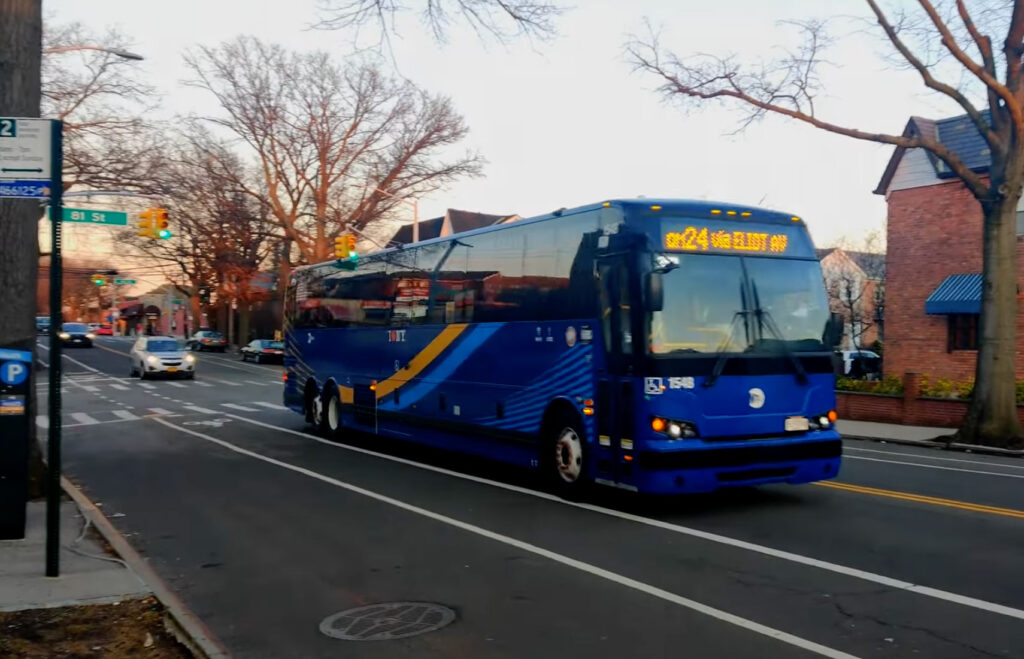
In Queens, the MTA’s express bus service is a critical part of the daily commute of many residents who work in Manhattan. Unlike the local service, these buses offer a direct inter-borough route to the heart of Manhattan with service generally focused during weekday rush hours. Without the express buses many riders would need to take a local bus and multiple trains to get to work in the morning and home every evening, making their commute extremely long and tedious. For this direct service the MTA charges a premium which is now at $7.25 per ride.
Of these express bus routes in our neighborhood, only one provides downtown service: the QM25. In Queens, the QM25 performs a “loop” starting on Myrtle Avenue, turning onto Fresh Pond Road, and ultimately taking Elliot Avenue to the Long Island Expressway. This loop allows this vital line to serve Glendale, Maspeth, and Middle Village.
During the recent Queens Bus Network redesign, not only was service on this bus route cut, but a midtown stop was added to this previously downtown exclusive line, increasing ridership. The combination of reduced service and increased ridership has been disastrous. The QM25 is now consistently overcrowded with extra travel times as additional passengers need to be picked up and dropped off. At times residents have reported having to stand on the bus—which rides on the expressway—or not be permitted to board and have to wait half an hour for the next bus, making them late for work. This came to a head during the recent winter storm, where a wait time of even fifteen minutes could result in frostbite.
Queens deserves better. This level of service is unacceptable especially at the premium price tag. To keep Queens, and our neighborhoods, thriving we must support our working residents who are generating commerce for our city and bringing money back to our communities to support our local businesses. When planning these routes there is always a compromise to be made between comfort and efficiency. However, with the Queens Bus Network Redesign, the balance has shifted too far out of line, damaging the community’s confidence in this once incredibly reliable—and premium priced—form of mass transportation.
Fortunately, the MTA has expressed their willingness to address this issue and conducted a multiple-month ridership survey during the morning rush hour. However, as of early 2026, improvements have yet to come and the overcrowding continues. It is incredibly important that the MTA prioritizes the restoration of service on the QM25 as soon as possible.